
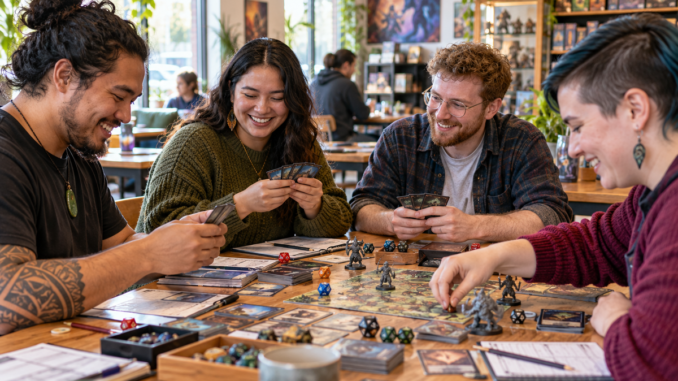
For people exploring magic the gathering nz, local games can offer more than a competitive pastime. Regular events provide a set time to meet others, practise a shared interest and build familiarity with a group. That structure makes tabletop gaming relevant to conversations about social wellbeing, particularly for adults seeking an activity they can return to each week.
A similar appeal surrounds dungeons and dragons, where small groups meet to solve problems and make decisions together. Players may arrive for the game, but the recurring sessions also create opportunities for conversation and friendship. These connections develop through a shared activity, which can feel more approachable than attending an event focused entirely on meeting new people.
Why regular events matter
Making time for social contact can be difficult when work, study and family commitments compete for space in the week. A scheduled game gives participants a reason to protect that time. They know where to go, what they will be doing and whom they are likely to see.
The format also gives newcomers a clear way to join in. A person can attend a beginner session, watch a round or ask about the rules before committing to a regular group. Conversation follows naturally from the activity: players discuss a decision, compare approaches or help someone understand an unfamiliar part of the game.
For established players, the benefits may lie in the routine as much as the event itself. Seeing familiar faces regularly can strengthen a sense of belonging. It also creates a point of connection outside work and home, without requiring every gathering to become a major social occasion.
Focus, creativity and time away from routine
Tabletop games give participants something specific to concentrate on. Cards, dice and shared scenarios invite players to assess options, respond to others and stay engaged with what is happening at the table. For a few hours, attention moves away from the usual stream of tasks and notifications.
Some people also enjoy the preparation around a session, such as organising a deck, painting figures or developing a character. These activities can be done alone, then brought into a group setting. That combination of personal interest and shared participation is part of the hobby’s appeal.
This is a practical example of recreation, a useful reference phrase for understanding how chosen activities fit into daily life. Enjoyable downtime does not have to be passive. For some people, a game that requires thought, creativity and cooperation is a welcome change of pace.
The health and wellbeing value should still be described carefully. A gaming group cannot replace mental health care or resolve social isolation on its own. It can, however, provide a regular opportunity for enjoyable contact, particularly when a group is welcoming and easy to access.
What makes a group welcoming?
The experience depends heavily on the setting. Clear information about event times, costs and expected skill levels helps people decide whether a session suits them. Beginner-friendly events are especially useful when a game has detailed rules or an established local community.
Experienced participants also shape the atmosphere. Explaining a rule without talking down to someone, allowing time for questions and treating mistakes as normal parts of learning can make a first visit much easier. A relaxed introduction may be enough to encourage someone to return.
Accessibility involves more than the rules of play. Venues can consider transport, physical access, session length and whether events run at times that suit different schedules. Offering both casual and competitive sessions gives people a choice about how they want to participate.
Online spaces have a role here too. Event listings and local groups can help people discover a nearby session before they visit. The strongest connections, though, may develop when those introductions lead to consistent, in-person participation.
A hobby with a social place
Tabletop gaming will not suit everyone, and its place in a healthy routine depends on balance with other needs and commitments. Its appeal is straightforward: it offers an activity people enjoy and a reason to share that activity with others.
For local clubs, shops and organisers, the opportunity is to make participation simple. Reliable schedules, clear beginner guidance and a respectful atmosphere can turn a niche event into a familiar part of someone’s week. For players, that may mean a regular game, a few new acquaintances and an enjoyable space to spend time together.